Here are some chores toddlers and preschoolers can do around the house that are age-appropriate, easy, and genuinely helpful. You’ll love the extra hand!

I am a long game person. A big picture thinker.
In some ways, this causes stress for my personality type, but in others it’s a blessing. I think about current events with one eye on the future. And that’s why I have always had my kids do everything they can on their own.
I knew I wanted 4 children, and the thought of having 4 teenagers not used to helping out was just too much for me.
In fact, it is surprising what things 2 and 3-year-olds can actually do on their own.
While I don’t have a chore chart or chore rotation yet, I do have the children help me do quite a few things around the house regularly.
And we like to use these cards to do it.
Keys to Getting Toddler and Preschooler Participation
- make it a routine activity
- have clear boundaries
- don’t make it optional
When we say things like, “Would you mind?” or “Don’t you want to?” we actually confuse the kids.
If the chore is optional, fine, but if you are requiring them to do this chore, the best thing to do is to say kindly but firmly, “We’re going to do x now, let’s hop to it!“
I’ll talk more about how to get toddlers and preschoolers to participate without coercion later.
Read: A No Nagging Morning Routine For School (With Printable)
Read: 5 Truths About Parenting Toddlers — That We Tend To Forget

50+ Life Skills (By Age!)
Check off critical household, social, and hygiene skills for your child so they’re prepared (not petrified) of growing up!
Simple Daily Chores for Toddlers (Ages 2–3)
- Picking up toys: This is a fluid task throughout the day. Before moving on to a new activity or leaving a room, toys need to be returned to their bins.
- Clearing their place at the table: Before getting down from meals, toddlers can carry their plastic plates, cutlery, and cups to the sink or counter.
- Putting clothes in the laundry basket: Placing dirty clothes directly into their room’s hamper after changing.
- Wiping small spills: Handing them a damp cloth to wipe up small table or floor spills gives them immediate ownership of their mess.
- “Fetch” helper: Asking toddlers to fetch simple items (like bringing you a towel or putting a book on a shelf) makes them feel useful and keeps them engaged.
Read: After School Routines For Kids That Prevents Meltdowns
Household Responsibilities for Preschoolers (Ages 4–5)
- Folding towels and small items: Both 3 and 4-year-olds can learn to fold washcloths, hand towels, and small blankets neatly.
- Setting the table: Preschoolers can easily lay out napkins, utensils, and non-breakable cups for family meals.
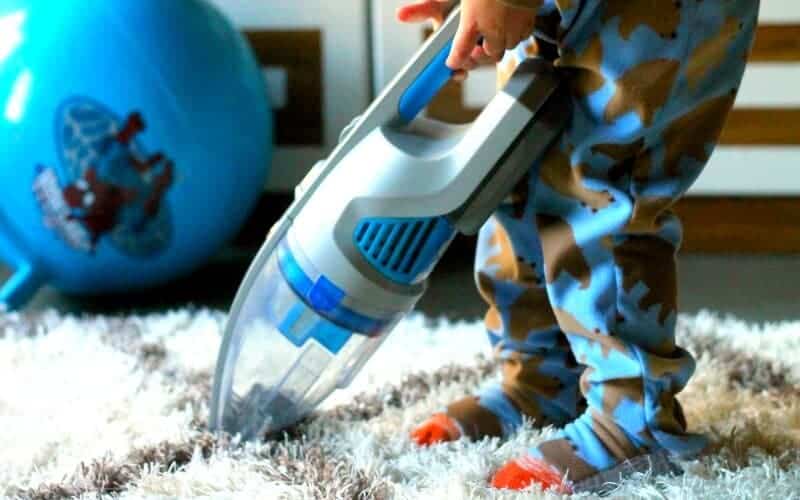
- Handheld vacuuming / Dust buster: Using a lightweight, quiet dust buster to clean under dining chairs or counter stools after meals.
- Straightening the bed: Pulling up blankets, arranging comforters, and placing pillows or stuffed animals neatly at the head of the bed.
- Gathering lightweight trash: Bringing small bathroom or bedroom wastebaskets to a central location on trash day.
- Putting away books: Returning books to lower shelves or bins after quiet reading time.
Read: Life Skills For Kids By Age (With Printables!)
How to “enforce” chores
Toddlers and preschoolers are Still Learning So Many Skills. I hope it goes without saying you’ll approach chores differently for a preschooler than a teenager, but there will still be some boundaries that’ll help you going forward.
Read: How to Raise Cleaning Machines: An Epic Household Chore List

No Nag Chore Routines

Create Logical Order In Your Daily Routine
Instead of having my children go to their rooms and clean at random times, they have to do it in order to do the next thing.
- They cannot come down to breakfast until their bed is straightened.
- They cannot start a new activity or leave for the park until play areas are picked up.
- They clear their plate immediately after finishing a meal.
This helps because they associate chores with certain times and are less likely to fight it.
Teach, teach, teach then stand back
I have two children who want to know how to do something, then run with it. They don’t want you to interfere and aren’t interested in your help unless they are truly in need.
I have another child who just wants you to do everything for him.
It’s always too hard even if he’s done it 100 times. With them all I teach, teach, teach then let them have at it. Once I know they can do it, I step back and do not hover. Even children find joy in completing a task.

Family Tidy Routines
Kindness and No Nonsense
This is true in all of parenting, really. Be kind and loving, but don’t get in power struggles. If you need them to do something, have them do it. If they won’t, give a consequence.
No meanness, no shaming, no drama. Just two choices. Do the chore or get a consequence or loss of privilege.
For us, this usually just means if one child refuses to do a chore they must remain there until they do it. This never lasts long, and the child usually completes the task fairly quickly if I leave them to it.
Saying, “As soon as you are done folding the towels you can come down to dinner. You can’t leave your room, though, until it’s done,” then walking away works a lot better.
Give it Time And Carry On Consistently
Lastly, just give the little things time. Once they see that chores are a regular part of family life, and they are required to join in, they’ll actually get a sense of pride.
Pride they are helping. Pride they are accomplishing a task well. And proud they are needed.
Sources:
- Involving kids in household tasks has a positive impact later in life
- Chores are associated with self-competence, self-efficacy, and prosocial behavior
- Longitudinal Harvard study shows chores are bigger predictor of good mental health as an adult (moreso than social class, family problems, and other factors)