Want to know the most important parenting skills you can focus on? There’s always “more” but the answer isn’t doing more, but focusing on what matters.
A while ago my husband and I started having conversations about how we felt in over our heads.
I began praying for help. Praying I could find a way to make sure I was meeting everyone’s needs without living in guilt and anxiety that I was going to screw the kids up.
And as is usually the case…
When I really start praying and thinking about something, solutions show up. New parenting skills, new ways of doing things, and reminders about things I used to do, but have let slip.
We can’t hold it all together all the time.
So in typical Rachel fashion I read tons of stuff, talked with my mentor, and started to put together some patterns. Parenting skills that research, experience, and Wise People all say makes for well-adjusted stable families.
Parenting Skills That Make The Biggest Difference In Family Life
We won’t do all of these perfectly all the time – of course – but when we feel things are off kilter or out of whack, they are a good place to start.
Some of these parenting skills are intuitive, and some are not. The key is to put them in your parenting toolbox for when you need to pull them out.
The Ability To Keep YOUR Emotions In Check Without Stuffing Them Or Exploding
“Emotions are good servants, but bad masters.” Unknown
It is so flipping hard to remain calm as a mother. That is a massively important parenting skill that takes a lot of soul searching to master.
Even though we know it’s okay to show emotions, be human, and feel the range of our feelings, it can be hard to take care of our children when we’re Big Balls Of Feelings. And since our children seem to bring out our Big Balls Of Feelings, it feels lose/lose.
The best illustration I’ve heard about how to handle overwhelming feelings (especially when you need to be able to remain calm) is to do this. This might feel a little fooey to you, but once you try it you’ll be convinced.
When you’re experiencing strong emotions and are tempted to yell, severely punish, or flip out, imagine that you are the sky.
You are the sky and your feelings are like clouds passing by.
Now, you might feel rage, disappointment, sadness, fear, anger, anxiety, or loneliness… Imagine that you are the sky and your feelings are clouds and you don’t need to do anything about the clouds.
You just observe them, call them out for what they are, and let them pass by.
When you are calm again you can make rational choices.
This is one of the hardest parts of parenting… not treating our children based on our own emotional reactions.
Taking care of your mental health shouldn’t feel like another chore. This workshop shows you how to build simple, sustainable routines that support your well-being and your kid’s emotional health—without the stress or overthinking.
A Routine Habit of Meeting Your Own Needs Before You Crack And Lose It
There is a lot of confusion and guilt around taking care of ourselves.
Self-care, they call it.
We may have a few opposing viewpoints that are deep back in our brains. If you’re a Christian like me, it’s probably worse. We think we need to pour ourselves out and sacrifice our sanity. That we should never ever ever put ourselves before anyone else in the entire world, especially never before our own family.
We get strung out, bitter, resentful, angry, and mentally ill but our answer is not to take better care of our needs and wants. OH NO.
It’s to make ourselves feel guilty that we can’t martyr ourselves more happily.
I think it’s a lack of understanding about what it means to meet our needs. And, in fact, meeting our own needs and living within our boundaries is a skill we develop over time and with a lot of practice.
Things moms need to love and serve their families well:
Adequate rest | If your baby is waking multiple times all night you don’t have to suffer this actual “torture” indefinitely, ask a friend for help.
Time alone | If you are an introvert, this is even more important. This isn’t a luxury, this is a necessity because you cannot run your home and love your family well if you have no down time to process and refresh.
Time with friends | We can lose our entire identity when we become mothers and then we try to find vicarious fulfillment through our children. This works until the kids don’t do what we want then it stops working.
Exercise and body care | Whether you are jumping up and down while watching Netflix (not saying I do this, not saying I don’t), joining a gym, taking classes, or just walking around the yard back and forth (desperate times, mamas), being active helps us physically, emotionally, and physiologically.
If you don’t do those things regularly then you’ll quickly reach the end of your rope. You can hang on to the end of the rope for a while, but eventually your hands will blister and your grip will falter and you’ll fall.
The Capacity To See Your Child Through THEIR Eyes, Not Your Own Needs And Wishes
We often confuse our own wants and needs with our children’s. Because we wanted to be involved in more extra curricular’s as a child, and our parents wouldn’t let us, so we sign our kids up for 5.63 sports per week and pretend it’s best for them.
We want to make sure our kids are very well-behaved in public so – when our children have a meltdown – we’re willing to give them whatever it takes to keep them quiet because we want to be seen to have obedient kids.
It’s really really (or as we say in the South…) real real hard do what’s best in the moment even if it makes us uncomfortable.
Family life shouldn’t feel like a constant race. This workshop helps you build a balanced, sustainable pace that handles responsibilities while making space for rest, connection, and what really matters.
Though I’m always writing about routines and rhythms – I will be the first to admit – doing things over and over can be tedious.
But this is part of where we realize that it’s tedious for US, not our kids. They need routine, predictability, and consistency. And you don’t really realize how important it is until you have a few days being off routine and then BAM… everyone’s fussy, whiny, hangry, and out of sorts.
It takes discipline and commitment to maintain routines, traditions, and rhythms when we just don’t feel like it. Maintaining healthy family routines are an important parenting skill.
Both overly permissive parents and overly strict parents produce dysfunctional dynamics within the home. We all probably tend towards one or the other of those extremes.
It takes thought and care to be a kind, loving, nurturing mother who also prioritizes limits and boundaries with her kids.
It feels hard at first, but it gets easier because it works so well.
When we are able to make rules that actually matter and forget the rest, it’s much easier to “enforce them.” And when we aren’t running around all day barking rules we don’t really care about then we are happier and more at peace.
If we’re at peace we can parent kindly always with the aim to meet our child’s needs. When we’re at the end of our rope we let things slide because we Can’t Take It Anymore.
So basically….
You don’t have to be a perfect parent. You don’t have to do all things right all the time… you just need to be in tune.
In tune with yourself.
In tune with your kids.
And, in tune when something is “off” so you can find a way forward.
You’ve Got A Family Culture… Embrace It!
You may find you want to add a few routines or rituals to your family life. Or might see some rituals or habits your family does you don’t believe in. This will happen.
The idea is not to give yourself a bunch of To Dos, but to figure out what is at the meat your family. What you believe in, what you like to spend time doing, and how you want your family to be characterized.
“If you want to have a happier family, find some family members, make some time, and play.” Secrets of Happy Families
In my quest to strengthen our own family culture and help you strengthen yours, I made a beautifully functional Family Culture Pack for you.
Use it to brainstorm your family values, then edit the template and print your own family values to frame or hang on the fridge.
Nail down the aspects of your family culture you already have and those that are lacking. Begin improving your own family culture today.
Here are some straight up parenting truths from Mary Poppins. Post contains affiliate links.
Last night I went into the kids’ bathroom and there I saw one of my boys at the toilet…
He was going #1 – with his pants at his ankles – playing a recorder.
I was shocked.
I honestly didn’t know men could do more than one thing at a time. (kidding kidding)
So my husband and I had a good laugh at this little musician in the making. And honestly, we laugh a lot. I think it’s one of the most important parts of parenting. Finding the funny in a situation that’d otherwise make you run out of the house screaming.
Before drifting off to sleep last night Mary Poppins popped into my mind. Wasn’t her main purpose in working for the Banks family to return Mr. Banks’ heart to his children? I think so.
When our culture says more, more, more, and the credit card limits keep getting higher and higher, it’s a rare person who can say enough is just right. Too many and things go to waste. Too few and there’s just not enough.
Boundaries aren’t harsh or selfish. They protect your energy, peace, and sanity so you can show up as the mom you want to be. This workshop helps you figure out where you need them, set them with confidence, and stick to them without guilt or burnout. Because when you hold your limits, everyone benefits.
Nurture Shock says the most effective parents are those who are firm with limits and kind at the same time. Being firm on family boundaries can be done with a loving and nurturing disposition. Children who learn their parents mean business have respect for authority. Children who learn their parents are pushovers become resentful and defiant.
Mary Poppins: “You’re not quite as turned out as I’d like, but there’s time.“
There is something refreshing and comforting about the truth.
“An honest answer is like a kiss on the lips.” Prov. 24:26
We’re scared to say the truth for fear of hurting our children’s feelings and crippling their self-esteem. We tell them they are good at something when they aren’t. We tell them they have skills they don’t have. We pretend they’re destined for success just because they’re alive.
A wise and loving mother balances truth and encouragement. She can say you are “not there yet” but that “practice makes progress” (our family motto).
Children don’t want flattery, they want you to believe in and support them where they’re at.
Being in charge doesn’t mean being harsh or heavy-handed—it means being steady, clear, and confident. This workshop will help you understand what healthy authority really looks like. When you know how to show up as a secure, grounded leader, your kids feel safe, and everyone starts listening.
It’s harder than it seems to let your kids learn their own lessons. It’s hard to watch your kids fall, fail, and flounder even when you know it’ll be better for them in the long run.
The truth is, kids don’t need us to protect them from life. Kids need us to prepare them for life.
Thanks, Mary Poppins, your wisdom is as timely as ever.
This is a sponsored conversation written by me on behalf of P&G . The opinions and text are all mine.
“We don’t winter well.”
Our family does not do winters well. We spend at least half the winter coughing, sneezing, with running noses, and fighting colds, flus, and viruses.
I don’t think we’re alone.
And we usually have one child contract something then pass it along to everyone else. Very fun. But, since we’re “experts” at this by now, we’ve learned a thing or two.
Here’s how you can fight a cold, the flu, and viruses when they’ve wiped out your whole house.
But first…
Is it a cold or the flu?
9 Things To Do When Winter Hits
I hope these will help you fare winter well.
Wash Wash Wash and Switch Out
At the first sign that something is going around strip the sheets, towels, and half dirty/half clean clothes in the house. Wash with a hefty helping of baking soda and/or hot water so the germs don’t keep circulating each time they lay down to rest.
Which, if they are really down for the count, will be often.
A nurse friend said that we should always have extra toothbrushes stored away. Why? When someone comes down with a sickness you should immediately throw out your current toothbrush and start using another. Then, when you’ve fully recovered, throw that one out and go fresh.
If you don’t want to waste toothbrushes you can always heavily sterilize and boil (if the toothbrush will withstand it) to avoid swishing around the evil germs.
If the sniffles abound, it’s a good idea to keep tissues on hand. I used to use baby wipes to help wipe snotty noses, but that actually irritated my little ones’ skin. Soft tissues work much better and you can easily keep a box of Puffs (with lotion) in everyone’s room.
BRAT
Particularly if a stomach virus or bug has give everyone upset tummies, a BRAT diet is a great way to begin getting some food back in the body. BRAT is a bland-food diet that doesn’t further upset your stomach and will help to solidify what’s already in it to prevent further diarrhea and discomfort.
BRAT…
B-bananas R-rice A-applesauce T-toast
It’s a slight step up from saltine crackers, and it’s foods the kids won’t reject.
Detox
Whether it’s from unhealthy foods, viruses, or our bodies just being worn down, one way to regenerate from the inside out is to do some basic things to detox. Detox meaning to help get the toxins out of the body safely. Detoxing helps if you have the FLC Syndrome (Feel Like Crap). I’m not talking about detoxing to lose weight, but detoxing to recover from the cold, flu or a virus.
One easy way to detox that is actually appealing when you’re in recovery is a detox bath. These can tend to make you drowsy so giving the kids or yourself a detox bath before bed might be a soothing way to start the evening.
Sterilize
Things you use around the house regularly that may never get a good wash should be sterilized. Whether you put them on high heat in the dishwasher or use a kettle to boil some water, things like water bottles, sippy cups, and pacifiers should be attacked with a vengeance.
Though these won’t bring you into a state of wellness immediately it will help prevent the nasty reinfection cycle.
Stock Up On Supplies!
For viruses there is no medicine that will actually speed up the process of recovery. However, often with colds and flus you can take some medication that’ll take the edge off of your symptoms. Put Vick’s on your little one’s feet with socks before bed if they’re coughing or have chest congestion.
Give older children Nyquil if they’re having trouble sleeping and this will relieve some of the more pressing symptoms as their body begins the healing process.
Hydrate
Hydration is key when you’re fighting off an illness. Particularly when your body is actually trying to get rid of most of the liquid in your body.
Water is an obvious choice, and it’s good to have everyone drink a small cup or two as often as they’ll take it. Gatorade (I would suggest Powerade, but I’m a Florida Gator so… you know) is even better because it replaces the electrolytes lost in your body after a bout of the upset tummy.
Ginger ale, sprite, and flat coke are also suggested to help settle tummies. If your little ones don’t want to eat, don’t force it. Their appetites will eventually come back strong.
Rest, relax, and release
I know it’s often a funny joke to say that a busy mom should lay down and rest, but unfortunately it’s essential. If you must abandon normal routine and schedules and allow more screen time than normal then do it.
If the kids need to lay on the couch under the covers and waste the day away with Disney movies, don’t let yourself feel guilty. Desperate times call for desperate measures. You can and will get back to a normal rhythm when the scourge has passed.
Ask for help
If you are like me then you find it hard to ask for help. If someone offers, sure, but going out of your way to ask is hard. If everyone is down for the count it may be a little easier, but if you have a child or two who are perfectly healthy yet you are really suffering, the best thing you can do is call in reinforcements.
Not that you want to infect others, but sometimes it’ll take someone else to help you push through until everyone is well.
So if you are reading this because you guys are all hammered from a cold, the flu or a virus (and I feel you) then hopefully you’ll find some tips and inspiration to start making the trek back up to health.
Inside you’ll find some parenting out of the box parenting mentalities that will help solve behavior problems in your home. Parenting problems are common, take heart with these tips.
The other evening I was mad as rip.
We’d gotten the kids to bed and the house was a mess and I knew that meant one thing: I was going to tidy it all alone.
This made me mad because I didn’t want to tidy all alone with my husband relaxing because every time I walked by him I knew I’d get an eye twitch out of anger. Couldn’t he just SEE the mess and WANT to help out? Couldn’t he just flipping half the job with me so it could be done quicker?
Then I had an epiphany.
I could do it all myself while stirring up my anger and frustration. I could be self-righteous thinking he could easily help me but chose not to so he’s a big fat jerk. Or I could kindly connect with him for a minute and then ask him to help me get it done faster.
I had to choose feeling like I was “right” or actually getting what I wanted.
It’s the same in parenting. Sometimes we can order our children to do what they’re told because we think that’s “right.” Other times we can set them up to succeed, set the scene, and prepare their hearts before hand so obedience is easier and fulfilling.
It’s our choice.
Mindset Shifts To Solve Some Parenting Problems
We mothers often want to just Speak Our Mind and, regardless of the circumstances, expect happy obedience 100% of the time. This is neither possible nor the wisest way to go around it.
This doesn’t teach children to problem solve or make good decisions, it teaches them to stifle their emotions and simply do what they’re told. Clearly there’s a time and place for that, but character formation is the goal, not robotic obedience.
Connect Then Expect
Type A mothers like myself have simple expectations. We want to say Something and have our children Immediately Do It.
While this is – of course – fair enough in some situations, it doesn’t always happen. And it isn’t just because our children are disobedient or don’t care what we’ve told them. Interestingly enough, children want to please parents they are in good standing with.
They are quicker to respond well to family boundaries if they feel part of a positive nurturing family. One of the first Go To methods for figuring out the root of behavioral issues is to connect first.
Being in charge doesn’t mean being harsh or heavy-handed—it means being steady, clear, and confident. This workshop will help you understand what healthy authority really looks like. When you know how to show up as a secure, grounded leader, your kids feel safe, and everyone starts listening.
We all know about the parenting extremes. Those who are authoritarian and expect 100% discipline 100% of the time. Then, on the other end of the spectrum, there are parents who are so permissive the children have no boundaries and do what they want.
The goal is a healthy mixture of control and freedom.
If you tend to give too little freedoms, try offering some more choices. If you tend to be very permissive, offer fewer choices. Surprisingly, children without clear boundaries are insecure and children who know what’s expected of them are more secure. You will know intuitively if your children need some reining in or some setting free.
It’s easy to go with the flow and let things happen. That is what’s referred to as the path of least resistance. When babies and then toddlers resist sleep, it’s easier not to fight. But the truth is that humans need restorative sleep to function optimally.
In fact, they need restorative sleep to function, period. Babies develop at a rapid rate during those first few years and research is clear that lack of sleep affects the body and mind.
Find out how to help your tired baby sleep. Help your toddler wind down and then set firm limits around naps and bedtimes. It doesn’t matter whether they act like they don’t need sleep. You are the mother and you know they need sleep. Lead the horse to water.
Stop Digging Your Heels In When You’e Got Parenting Problems
One of the best things you can do to avoid power struggles is to stop fighting.
Does that make you feel relief?
If not just wait for it. You’ll feel relief soon. Instead of digging your heels in and issuing commands here and there with your children, pull back. You are the parent and you’ve set the limit. Do not try to force your child to do what you say. Instead choose a consequence for not doing what is necessary and communicate that.
Instead of saying, “Get back in your room and clean it right now!” you might say, “We play outside after our rooms are clean.”
An enforceable statement says, “You can eat dinner once homework is done.” It does not say “Do your homework now!” Enforceable statements give back control to your children while making consequences for their choices clear.
Half the frustration of parenting is the battles. Stop fighting them.
It’s not weak parenting to understand that our children are not robots.
It’s not weak parenting to give kids control we don’t need.
It’s not weak parenting to look past some actions to get to their heart.
On the contrary, a little bit of grace goes a long way.
Hi there, this is a guest post from Jenny, a blogger from Northern California I met a few weeks ago. I was super interested in her canning technique (being the country girl I am) and invited her over to share some basics with us!
Hi Everyone, I’m Jenny and I blog about homemade food and craft at The Domestic Wildflower. I met Rachel at a blogging conference and we realized we were birds of the same feather right away; we help busy mamas with the daily life of feeding and raising kids as best we can.
She’s invited me to share one of my BEST tips for cooking homemade food in advance for my little kids & blue collar husband.
It’s an answer that surprises most people, but hear me out…
Canning is cooking in advance.
There are TONS of tips I’m going to share with you about modern canning so you can learn to preserve healthy, wholesome, homemade food in jars with me today!
4 Facts About Modern Canning
#1
Canning is NOT the way you remember your Granny doing it. Canning can be FAST, easy, and simple. I’ve yet to share a recipe that is complicated, and I’m all about figuring out how to make this old fashioned technique work for my busy life – and yours!
#2
Canning saves SO much time. Investing an hour or two (not 10!) to can something healthy for my family to eat means that months later, I can crack open a jar of applesauce, pickles, tomato sauce, or jam and have food I’m proud to serve my kids and guests alike.
#3
Canning is safe. Canning is a science, like baking. You just have to follow the simple steps and a trusted canning recipe (both of which you’ll find here) and you will be good to go. Any scary story about canning you’ve ever heard involved someone NOT following the directions. And, as we tell our kids all the time, we know what happens when we fail to follow instructions, right?
#4
You probably already have almost everything you need to start canning today. Canning does NOT take a ton of equipment, contrary to popular belief. You need just a few things which I’ll list below.
Canning Equipment
Here are the basic things you need to begin canning:
Canning Pot | These are often the black with white speckled enamel pots that are really large and are frequently sold with a wire rack inside. You don’t have to have a huge pot like this, and if you are a single person or a small family (read: not canning to feed a small army) a pasta pot will work just fine. The pot will need to be taller than the tallest jar you plan on processing (that means sticking inside the pot, upright) by at least 3 inches. The beauty of a smaller pot is a shorter time for the water to boil which can be very helpful indeed. Your pot doesn’t need a lid, though the water will come to a boil faster if you do.
Rack | In the pot you will need either a rack made of wire or a silicone trivet. The silicone trivet+ pasta pot is my favorite combo.
Preserving pan | This is the pot/pan you will cook the fruit or vegetable in before you pour it into the hot jars. It can be similar to the water bath pot, but it would likely be a pan you already own that is heavier bottomed (less chance of scorching your jam or salsa) and can have lower sides.
Canning jars | You don’t want glass mayonnaise jars that look very similar that are often found in garage sales, nor do you want a reused store-bought pasta sauce jar. You need canning jars that are specifically created to withstand the heat of water bath canning. They don’t need to be new either. Jars can be reused over and over for years. You should check the rims and the jars themselves carefully for cracks or chips.
Rings | They can be used but they should not be rusted.
New Lids | The seal that is created from the lid on the rubber flange is only good (read: safe) for one trip through the canning pot.
Utensil Kit | You need tools to put the hot food into the hot jars. A utensil kit usually contains a funnel and a tong-like jar lifter. A funnel is necessary for pouring your boiling hot food into the very hot jar, and the jar lifter is THE tool that you must have for getting the jars in and out of the boiling water that you probably don’t own already.
Now that you have all the stuff you need, you are ready to make your own homemade goodness. First, you’ll set up your stove top, and THEN you’ll cook your applesauce, or jam, or salsa, or whatever preserve you’d like.
Here’s How To Set Up Your Stovetop
Assemble (5 minutes): A water bath processing pot, a wire canning rack (typically sold with the traditional speckled pots) or a silicone trivet for a stock pot. Also, gather the number of canning jars you’ll need (usually specified in the canning recipe), rings and NEW lids. For this applesauce recipe, you’ll need about 10 half pint jars.
Place a towel down flat on a nearby countertop. This will serve both as a temperature buffer and a soft resting place for your freshly canned jars. On the towel, place your funnel, jar lifter and ladle. Note: Since 1969, simmering lids in a saucepan to soften the flange has not been required. Just have the lids on the countertop with the rings. Also note, you don’t have to sanitize your jars as your jars will be in boiling water for 10 minutes.
Prepare (5 minutes): Put the jars in the bottom of the pot and one by one, fill them from the faucet with water, and then fill the pot of water entirely, covering the jars. Place the pot on a large burner, preferably in the back, and turn it on high. Bring to a boil while you prepare the food you’ll be canning. If the water starts boiling vigorously, turn the pot to medium heat. Add water to the pot should the boiling cause too much water to evaporate and the water level to lower.
Now You Are Ready To Make Applesauce
Canning applesauce is one recipe I’ll share with you today that is super fast, easy, and a great kid pleaser. You can make it with zero sugar, and you can even skip canning it and eat it fresh if you want to. No sugar applesauce makes a great baby food, especially if you can it in the tiny, 4 ounce jelly jars. Hello, convenience size!
8 cups apples, washed and chopped, stems, cores, and seeds may remain IF you have a food mill. If you don’t, peel and core apples and chop into large chunks. water to cover- at least 8 cups
3/4 cup sugar
2 tablespoons real maple syrup
2 teaspoons vanilla
1 teaspoon cinnamon **for baby food, omit all but apples and water, and use 4 ounce jelly jars.
Combine apples and water and simmer together in a preserving pan (a heavy bottomed, wide pan) and stir occasionally for 20-30 minutes or until apples are very soft.
Puree: Remove from heat, ladle into a food mill, and push through. OR apples could be peeled and cored prior, and mashed with a potato masher.
Return apples to a boil, add sugar, maple syrup, vanilla, and cinnamon.
Cook for 5 minutes.
Ladle into jars one at a time, leaving ½ inch between the applesauce and the top of the jar.
Apply lids and rings and submerge into the boiling water of the boiling water bath with a jar lifter.
Process for 10 minutes PLUS 5 minutes for every 1000 ft you live above sea level. Remove the jars from heat, rest jars carefully on towel covered countertop. Label cooled, sealed jars and store for up to 1 year.
Yields about 10 cups of applesauce.
I want to share with you my BEST resource for busy, new canners to help you get started on the right foot and, GOOD NEWS, it’s free!!
The Canning Essentials Workbook will help you work smarter, not harder. It has 12 pages of visual guides to help you make sure you have exactly what you need before you start canning AND as you make your first batches.
In it you’ll find:
A stove top visual guide to show you what pot goes where, when!
A canning log to help you keep track of which recipes you LOVED making, and which you didn’t
An acid and canning guide for making safe recipe substitutions (Can you swap out lemon juice for lime? Sure! Lemon for tangerine? Nope!)
Complete canning equipment checklists for water bath AND a new kind of fast canning- steam canning!
A pantry item checklist- so you are ready to preserve when you bring home a great flat of peaches or lug of tomatoes!
A canning season planner- streamlining your canning process and eliminating stress!
An elevation adjustment guide for increasing your process time for those canning over 1000 feet.
This valuable guide is yours, completely free, by clicking here!
Use the coupon code: MOTHERFARFROMHOME at checkout!
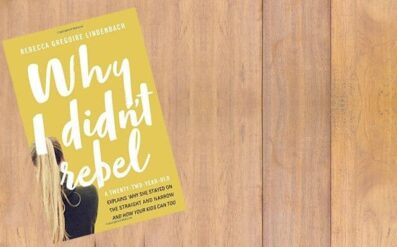
Inside if a review on the book Why I Didn’t Rebel. I hope you find it helpful! Post contains affiliate links.
As a mother of 5 I do a lot of thinking about the future.
And I know, of course, that with parenting there are no guarantees.
It is a comfort to me that we can do our best to minimize the chances of our children going off the rails, but ultimately our children will make their own decisions, live their own lives, and do whatever they decide is best for them.
And yet we still have a great responsibility as parents. We have an opportunity to make parenting choices that help children feel accepted, loved, and part of something greater than themselves. And these are the things that help children make good choices.
More or less.
I recently read the book Why I Didn’t Rebel and these are the principles I learned from the various case studies in this book.
What I Learned From The Book Why I Didn’t Rebel
To write this book the author Rebecca interviewed a number of people and found some common principles that reigned the homes of those children who didn’t rebel. Here are 3 main ones that stuck with me. Why I Didn’t Rebel goes into much more detail.
Give Reasons, Not Just Rules
For smaller ones this will look different than tweens or teens, but the principle remains. If you can explain why your rules exist in an age appropriate way, do so. And be willing to let go of rules that don’t actually serve a purpose. Just because you always did it growing up doesn’t mean it’s a morally necessary rule now.
It is not “losing” to drop rules that don’t really matter. By having rules that make good sense for your family – and explaining those to your kids – you increase the chance the kids will consider the rules to actually be important and valuable.
Be A Team, Not A Club
One aspect Rebecca touched on often – as did those in the case studies – is that having a strong family culture contributed to good choices in the teenage years. Kids who felt they had a good family life and actually had fun with their parents made good choices when faced with hard decisions. Why? Because they had an alternative to the “good time” that others offered.
But interestingly, it wasn’t just the families with just a strong culture, but those who had a culture of service and care for others. So families who were not an exclusive club in themselves, but who made a point to love others as a family. Giving to others feels good, and when kids were exposed to this at an early age and throughout their upbringing they were more likely to think about others and not just having a temporary good time.
Be Real, Not Perfect
She was quick to point out that those who didn’t rebel weren’t from “perfect families” with “no problems.” They were just real, genuine, and able to speak honestly. We all know authenticity is a buzz word these days, but for good reason apparently. Kids don’t need perfect parents, they need parents who are able to be real with them. To laugh and cry with them and learn from their mistakes.
And – this is important – to actually admit their mistakes.
Then to apologize.
My Why I Didn’t Rebel Review
This book was a super interesting fast read. Even if your little ones are only toddlers or preschoolers, it’s relevant and encouraging. It’s never too early to put into practice the simple and easy to understand concepts from this book. It should definitely go on your reading list! Check out Why I Didn’t Rebel here.
Inside you’ll find what I’d tell myself when I first became a mom if I could go whisper in my past self’s ear.
I had far too much time on my hands with my first pregnancy.
I’d never been a babysitter.
I had no clue what to do with a baby.
I was totally freaking out about the whole thing. 5 Things I Wish I Knew When I First Became A Mom
So I did what a Type A woman normally does when presented with a dilemma, crisis, or new situation… I read a million books. I learned, researched, and mentally prepared to be a mother.
I talked about it to anyone who would listen (and to some who would not). I lived and breathed baby care. As the weeks drew nearer to delivery I began to feel confident, ready, and up to the challenge of motherhood.
As it turns out… I was up to the challenge.
5 Things I Wish I Knew When I First Became A Mom
One down side to that preparation? I was a little neurotic. I wasn’t always reasonable. I didn’t know when to relax and let things slide. Having had 5 babies in 5 years, well, I’m different now. And here’s what I’d tell myself 6 years ago if I could go back.
Know that life is a video, not a photo
We mothers who aim high often struggle in the moment. Because we have lofty goals and big dreams we get discouraged along the journey when we Aren’t There Yet.
6 days out of the week the house can be in good order, but if 1 day it is not… well… we’re slobby housewives. Most Sundays we’re able to get our family to church on time, but the one Sunday we don’t… we’re undisciplined slackers.
If you take a snapshot of any moment there are bound to be flaws. Areas where we fall short. Things that still need doing. But if we were to take a video of our days we’d see a different story.
Sometimes it’s clean, sometimes its dirty. At times we’re early, at times we’re late. Our average is good. Remembering that each moment doesn’t need to be perfect to craft a good life takes weight off a mother’s heart.
In just 15 minutes a night (while you’re in your pajamas!) take your home (and heart and mind) from stressed out to organized.
28 Things To Do If Baby Won’t Sleep CHECKLIST
Fast, simple, and free strategies to implement if baby can’t get to sleep, won’t *stay* asleep, or is unsettled in general.
Make systems that save you brain power
I spent the first few years of motherhood constantly reinventing the wheel. Instead of creating systems that maintained themselves, I had to recreate momentum for many areas of our lives and in our home.
Grocery delivery, automatic diaper delivery, cleaners or helpers coming at set times. These things make life less hectic and frantic.
The best thing I’ve had on delivery? Diapers.
I don’t know how many times we’d get down to one diaper then have to “go to town.” (We live 20 minutes away from the nearest Wal-Mart). Now you can do something amazing and sanity saving like getting diaper subscriptions that come straight to your front door.
This workshop will help you build a simple 15-minute daily routine that fits into real life—so the house stays (mostly) clean and the kids finally learn to help. Because a clean home is a team effort, not a one-mom show.
Oh my goodness how much time I spent putting out fires and pulling rotten fruit instead of digging down and finding the root of my struggles. Whether it was household systems, baby sleep issues, or even why I was feeling like a hormonal crazy person.
Instead of trying to just fix something in the moment, I could have saved myself a lot of trouble by digging deeper. Probing for longer and taking the time to make permanent changes.
Examine yourself and your feelings.
Observe your baby and their habits.
Locate home system failures and improve upon them.
I can still remember sitting on the toilet, putting my head in my lap for a 10 second rest, then spying spider webs on the baseboard in the bathroom corner.
I burst into tears instantly.
Those spider webs were mocking me. Bad housewife! Lazy woman! Get your act together! I called mom on Skype later that day (I was in Australia at the time) and told her how hopeless I felt. I had a baby and was pregnant again and so exhausted I could barely cook dinner, much less clean cobwebs out of bathroom corners.
She graciously offered to pay for a cleaning crew once a month and it was a better gift than diamonds. Now, talking to younger self, I would say that it’s okay if standards slipped a bit. It’s okay if you aren’t exactly as ordered as you’d like. You will get back in a groove.
You will have more time when you’re not pregnant. You will be the woman you know you are deep down.
One corner of cobwebs doesn’t make you a failure as a mother.
Taking care of your mental health shouldn’t feel like another chore. This workshop shows you how to build simple, sustainable routines that support your well-being and your kid’s emotional health—without the stress or overthinking.
Now, as my youngest (and final) baby is 1 year and 3 months old… I have learned this lesson. I lay with him every time he drinks from his bottle or anytime he’ll allow it.
I hold him, rock him, cuddle him, and laugh with him pretty much all day every day. In fact, I still get a surge of happy hormones just seeing him.
Mama body chemistry.
With my first kids I was so focused on doing all the things, checking off my list, and making sure everything would look nice to the people I never invited over because I was so stressed, that I just didn’t hold my babies as much as I wish I had.
Sure, I loved them with every fiber of my being, but I didn’t know how to slow down. I didn’t know how to be in the present.
But now I do.
Bedtime Brain Release Sheet
Don’t end the day with anxiety, stress, and a full mind.
This evening brain dump journal sheet will help you get in a peaceful mindset so you too can sleep peacefully through the night.
Give Me Less To-Do’s And More Life
Now I don’t even try to do the things I can assign to others. I choose my children over things that don’t matter as much. I don’t try to save $15.00 a month by driving to 12 grocery stores to find the best deals because it doesn’t serve our family. It did in the past, but now it doesn’t.
Now I search for tools, systems, and habits that will help me to streamline our home so we can actually get about the business of living.
Inside you’ll find three important pillars of Dutch parenting.
In 1915 a Dutch pioneer nurse, Aafke Gesina van Hulst[1] created the three R’s …
Rust, Reinheid, and Regelmaat
And it stuck.
For generations, the pillars have been the most important base of Dutch family life. Although family life has changed in a lot ways since 1915, the principles now are more true than ever.
In the hectic world we live in, they provide valuable guidelines to keep yourself and your children happy and healthy.
(Psst, this is the third part in a 3 part series. Read Part 1 and Part 2).
On average, Dutch moms manage to provide quite a lot of rest for their babies and toddlers and hence themselves. The focus on rest is pretty much engraved in the Dutch parenting culture.
Research shows that compared to American babies, Dutch babies at the age of six months get an extra two hours of sleep per day[5].
There are two vital elements to ensuring their children get enough sleep. The first one is a very clear distinction between and separation of the sleep and awake time and environment.
When Dutch children are asleep, they sleep in their beds (if possible), when they are awake, they are with the rest of the family. Dutch children usually don’t sleep in the playpen or in the car.
The second element to providing plenty of rest and sleep is making sure that children aren’t overstimulated during the day. Therefore, Dutch parents keep activities, sounds and visual stimulants restricted. This creates a calm environment and sets the children up for better sleep.
The three R’s date back to 1915, so the second R may seem obvious to most moms these days. Back in those days, parents needed to be reminded of the importance of hygiene to keep their children healthy more often.
Nowadays, we know that sterilizing bottles, washing hands and cleaning our bathrooms is very important. Thus, as valid as this pillar is these days, it has become pretty obvious.
The last R, routine, may be the most important one. Routine makes things predictable and thus manageable. Of course, babies have their own internal routine and sometimes flexibility is needed.
But Dutch families often have a schedule and they try to stick to it.
Even the little ones in the family are on a schedule after a few months, gradually merging in with the schedule of the rest of the family.
Why does a family, and young children in particular, benefit from a daily schedule? There are a few claimed advantages of a (not too strict) routine.
Giving you a step-by-step guide to overcome barriers and stick to the healthy routines you’ve committed to. Learn the mindsets and secrets disciplined moms use to run a tight ship🚢 (think, mornings, chores, homework, bedtime, self-care, etc.)
Predictability makes babies relaxed and less fussy,
Less discussion with toddlers and older children, everybody knows what’s expected of them,
Children usually don’t get hungry or sleepy at inconvenient times, and
Strict dinner and snack times make it easier to keep up with healthy eating habits.
Of course, the Dutch are not unique with their use of schedules and routines. However, they do seem stricter in their execution when it comes to sleeping and eating.
In many Dutch families, naptime is holy for babies and young children, they sleep in their own bed, dinner time is usually the same and at least two meals are eaten at the dinner table.
Although there’s certainly nothing wrong with a bit of flexibility and spontaneity, a modern version of the three R’s still is a great way for parents and young kids to survive the hectic world we live in.
Getting enough rest, living in a clean environment and having predictable days still makes children very happy. By the way, it’s not only the children that thrive upon the three R’s basis, it’s the parents as well.
And we all know that happy parents make happy children.
Kittie Ansems is a Dutch mom, a former child care professional and a parenting book fanatic. Her blog, Happy Dutch Home is all about helping moms survive their kids’ toddler years, using Dutch parenting principles.
Kids jumping from the couch to the chairs. Pillows flying, laughter, kicks, screams of joy. It’s like a scene from a sitcom, only it’s happening in my living room.
“Guys, the couch is not for jumping. Let’s take it to the trampoline,” I so calmly and kindly interject.
Five seconds later, I hear grunting, bangs, and booms in the basement. My 12-year-old and 10-year-old are wrestling and knocking things down all around them.
Again, I interject. “Boys, settle down.” They disperse, but only for a moment. Now they’ve taken to a full-on Grand Prix race in the house, running through the kitchen, the living room, the dining room, up the stairs, down the stairs, around the halls.
Backtalk isn’t just annoying—it’s draining, discouraging, and makes even the simplest requests feel like full-blown negotiations. This workshop will give you a step-by-step plan to stop the constant pushback and start building respectful, two-way communication with your kids. Because when you know how to hold boundaries and help your child feel heard, the fight fizzles—and connection takes its place.
I can be a pretty patient mom. In fact, I’m working really hard on it. But sometimes I just need my kids to settle down.
For a long time, when my kids would get so riled up, so much so that the house felt like it was shaking on its sides like one of those bouncy houses at the fair, my go-to phrase was, “Take it outside.”
I know the importance of play and getting kids into the fresh air, and getting it out of my house when they are running around like crazy. Okay, that last part, is really just for my sanity.
Let’s be real honest. Telling kids to go outside and sending them to go play and romp in the fresh air doesn’t always work.
Sometimes, you’re in the middle of a grocery store, you can’t really send them outside while you’re walking down the aisle and they start to wrestle.
If you are at your sister’s wedding sitting on the pew and suddenly your kids start to crawl on the ground, you can’t really give them the nod and say, “Go ahead, go run outside.”
As much as I know kids need to move, and wiggle, and get out in the fresh air, there are times that they need to settle down.
In those instances, we need a quick strategy that will both give the kids exactly what they’re needing and settle their little hinnies down, even if it’s just for a couple of minutes.
Before I tell you this super, quick tip, I want to let you in on a little secret that I learned about a couple of years ago, that has literally changed my life.
When my oldest was seven, he could never sit still. He didn’t have a slow speed, he ran everywhere he went. Going to family events was a nightmare because he was on level 10 the entire time, until I learned about proprioceptive input.
50+ Connection Questions
Pull out these fun connecting questions to share some laughs with your precious ones!
Use them at:
meal times, car rides, as a “calm down” trick, for dinner time conversation, or any time the day is getting chaotic or you need a reset to connect.
I know, you’re probably thinking, “Whoa, whoa, what in the world did she just say? Proprio what?” Don’t worry, I did the exact same thing when I first heard it.
The proprioceptive system is one of the most important sensory systems in our body.
Much like you, I’m sure, when I was growing up, I was taught there were only five senses. Boy, were we wrong.
The proprioceptive system is responsible for taking information from our joints and muscles, and sending those messages to our brains.
It tells our brain information about our body position, movement, force, direction of our movements, and helps us instinctively know how much pressure or force we should use when doing different activities throughout our day.
So, what does the proprioceptive system have to do with your kids running around like banshees? You see, a healthy proprioceptive system allows children to move and play, and interact with their world in a smooth and coordinated way.
Not too gentle, not too rough.
When children need more proprioceptive input, you might notice some of the scenes like I described above.
Your kids are suddenly too rough,
Pushing,
Pulling,
Being overly aggressive,
Rarely walking,
Always jumping or running wherever they go,
Difficulty sitting still or upright at the table or in a seated position,
Constantly leaning on walls, furniture, or people to hold themselves up, and
Being too destructive with their toys.
If you see these things in your children, it doesn’t mean that there’s something wrong with your child.
It could just be a sign that your child is under or over responsive to the proprioceptive input around them.
All those big words aside, really what this means is, when your kids are running around your house like crazy, jumping on the furniture and roughhousing in the basement, there is a quick and easy fix.
That’s proprioceptive input.
While it sounds super crazy, and a little scary, it’s not. It’s actually super easy. In fact, here are five simple ways to give your kids proprioceptive input so you can settle them down when they are roughhousing.
Taking care of your mental health shouldn’t feel like another chore. This workshop shows you how to build simple, sustainable routines that support your well-being and your kid’s emotional health—without the stress or overthinking.
5 Simple Ways to Give Your Kids Proprioceptive Input So You Can Calm Hyper Kids
Simon Says
We all know the game of Simon Says. Simon says, “Put your finger on your nose. Now, touch your head. Oh, Simon didn’t say …”
What many of don’t realize, is that when were playing a game of Simon Says, we’re putting our proprioceptive system to work. You’re settling your child’s mind, making them mindful and focus on where their body parts are.
It’s hard to run around the room and jump on the furniture while trying to close one eye, touch your nose, and rub your belly all at the same time.
Animal Walks When I first learned about proprioceptive input, animal walks was one of the very first things I ever tried with my son. I remember it like it was yesterday.
We were at grandma’s and he was running back and forth, from the kitchen to the living room. Kitchen to the living room, and only stopping when he ran into somebody.
That’s when I remember reading about proprioceptive input and these things called animal walks.
By having my son get down on the floor and walk like a crab, I was giving his joints and muscles the input it needed. It was like magic.
We walked like a bear, we walked like a crab, we jumped like a kangaroo, and I will never forget my mother-in-law’s face when my son magically got up from his animal walks, looked at me, gave me a hug, and calmly walked into the other room and started playing with his cousins.
She looked at me bewildered, “What in the world just happened?” This proud momma just looked right back at her and said, “I know, right?”
Gum
Before you tell me to shut the door or hold the phone, because there’s no way you’re going to give your child gum when they’re running around the house like crazy.
I want you to hear me out just for a second. Gum is actually a very quick and easy way to give your kids more than one form of sensory input.
Not only will they use their sense of taste, and smell, and touch, they’ll also be using their sense of proprioceptive as they chew, and chomp, and give their jaws the input that their body is seeking.
This little tip works so well, that my son’s teacher started letting him have them at school.
Discipline shouldn’t feel like a battle or a shot in the dark. This workshop gives you a clear, balanced plan for setting boundaries that build respect and responsibility—without yelling, harsh punishments, or constant power struggles.
Burrito rolls have to be one of my favorite things I’ve learned about since learning about proprioceptive system.
My kids love it too. Gather the kids around with your favorite blanket, sprawl the blanket out on the floor and have one child lay on top of the blanket with their head off of the blanket.
Gently wrap the blanket around them so that they look like a burrito with their head sticking out.
Now it’s time for all the toppings. As you pretend to put sour cream, and cheese, and lettuce, and salsa on your burrito, gently squeeze your child’s arms, and legs, and joints, and muscles.
They will giggle and laugh all while getting their proprioceptive input. The other kids will be begging for their turn.
The good news is, as soon as you’re done unwrapping your burritos, you will notice their energy level has gone down about five notches.
Hand Squeezes
All right. Let’s be honest. You can’t take a blanket with you everywhere you go. Some situations are not okay for your child to start walking around like a bear.
I promised you that I would give you things you could do within 30 seconds anywhere you go.
The hands are an excellent way to get proprioceptive input into your child and settle them down no matter where you are.
And guess what?
Family Rules Brainstorm SHEETS
Start brainstorming rules to make your family life more peaceful, connected, and strong!
Their hands are going everywhere with them.
If you’re at a restaurant, have them push up on the chair using only the palms of their hands.
In line at the grocery store, have them give themselves hand squeezes, where they push their palms against each other.
Need the kids to settle down before you get into the car? Have your kids push against you with both of the palms of their hands, trying to push you over.
Need your kid’s to settle a little before sitting down for homework? Have them push their hands against the wall and do a few wall push-ups.
The truth is, once you learn about proprioceptive input and the magic that can happen when you start putting these little tiny exercises in your day, you are going to wonder why this isn’t plastered on every billboard in the world.
You’ll have the secret tip in your back pocket. You can take it anywhere.
Just remember, the next time your kids go from the couch to roughhousing to running around and having their own grand Prix in your living room, instead of just telling them to go outside, take 30 seconds and have a little squeezy, squishy proprioceptive fun with them.
You’ll thank me later.
A NOTE FROM RACHEL: I can’t recommend Dayna Abraham’s new book highly enough! The Superkids Activity Guide to Conquering Every Day is a beautiful book full of simple and easy to do activities with your children. Dayna’s the mom of 3 kids and she’s a Genius Sensory Mom and has a lot of awesome
What began as a simple book with 75 simple crafts, games and activities to help adults and kids manage the most difficult parts of the day (mornings, wait times, mealtime, playtime, learning, and nighttime), The Superkids Activity Guide, slowly became a movement. The Superkids Movement and Activity Guide is aimed to empower ALL kids to speak up, share their superpowers and learn why they do the things they do so they can advocate for themselves!!
If you are tired of nagging your kids to settle down, exhausted with the constant jungle in your home, and ready to connect with your kids… this is the book for you! ABOUT THE AUTHOR: Dayna Abraham is the mother to three totally awesome superkids who inspire her every day to be the best grown-up sidekick they could ask for.
When she’s not helping her kids conquer the world, she keeps busy by writing at lemonlimeadventures.com, writing books like Sensory Processing 101, STEAM Kids, and Learn and Play with LEGO®, and drinking lots of coffee.
She loves getting her hands messy and creating crazy science projects and crafts to keep her super kids at home busy. Before she was a writer, she was a National Board Certified teacher, where she met some of the coolest superkids on earth.
As a little girl, she wished grown-ups and other kids saw her as a superkid, so now she’s made it her mission to inspire kids like you to love who they are and embrace their differences.
Inside you’ll find part of my story of early marriage and how those lean times made me the parent I am today.
I remember it like it was yesterday. I was in a new city in a new country with a new baby. We had nowhere to live, no jobs, and knew a grand total of 1 person in the entire state. We had gotten pregnant within our first year of marriage which put a kink in our plans. It left us with fewer options, and gave us another mouth to feed.
Tears pooled in my eyes as I walked down the street in a suburb outside of Sydney.
I went from dollar store to thrift store and back again looking for inexpensive furniture and household supplies. As I walked into these stores I imagined a big sign over my head with red flashing lights that said, “We got nothing.”
I felt humbled. I spoke 3 languages and had both a bachelor’s and a master’s degree, but I was driving a 15 year old car and no landlords would approve our application to rent. For the next month we would apply for a dozen or more homes and be turned away by each one. I was so desperate I decided fasting was the only answer.
I would give up Diet Coke until one of us found a flippin’ job.
Note: 20 oz. Diet Cokes were $4.20 in Australia so it was just as well.
Every time we left the house I felt exposed. These people would think I didn’t have a job. I didn’t have a job! They would think I didn’t have any skills. But I did have skills! My pride was laid bare before me and my heart felt humiliated at our humbled position.
Sure… we had a healthy family, a friend’s roof over our head, and the time to figure this out. And though we had no assets to our name, we had no debt.
Within a month or two we found a duplex near my husband’s university. He got a night job and I found a job online as a research assistant that paid the bills. Both were part time and it meant we had just barely enough. But we got by.
Recently I read a book called More Than Just Making It where Erin talks about her struggles during a time of financial lack.
Memories of making all our meals from scratch because I couldn’t afford to buy anything packaged or pre-prepared.
Memories of spending $25 on take out and feeling guilty about it for days.
Memories of going to the public library because it was the only way I could read new books.
Those years changed me. They made me who I am today and they affect how I parent. In fact, they make me a better parent. In this day and age it’s hard to raise children who aren’t entitled. You know what makes it easier?
Parenting through a crisis feels heavy—but you don’t have to do it alone. This workshop gives you a clear plan to bring stability, emotional safety, and strength to your family when life gets shaky. Because in hard times, your kids need a steady, loving guide.
The other day I went into my daughter’s room and she had taken my fingernail polish (which she knows is off limits without me) and painted her toenails. This wouldn’t be so bad if she hadn’t got the polish on the new flooring and her rug. Oh and two monogrammed towels. One of which was our wedding present and another passed down from her great-grandmother.
Let’s say I was livid and leave it at that.
It would have been easy to just punish her and move on. To yell or kick up a fuss and give her a lecture. Instead, I wanted her to learn the value of money. She can’t replace the sentiment that came with those towels, but she can replace the towels themselves. And the rug. So she worked. She created a list of chores she could do for money to replace and repair the things she’d messed up. And you know what?
The list of chores she made was twice as long as I would have given her.
“Because we grew up in middle class families, we were unacquainted with financial struggles. The generation before us taught us that if we worked hard and acquired college degrees, we’d be financially secure. But, as our family discovered, anyone can face a financial crisis regardless of upbringing, education, gender, culture, or race.”More Than Just Making It
Money doesn’t grow on trees….
I remember making my firstborn applesauce. I literally peeled apples and cooked them down into a sauce for her puree. I actually think this cost more money than buying applesauce but it seemed like a good idea at the time.
I also remember when she had an intolerance to cow’s milk so we switched to goat’s milk but then could no longer buy it at $4.50 a quart. We had to switch to soy or almond milk and even long life milk and I felt a truckload of guilt on my shoulders. I remember filling her little nursery with used baby items and hand me downs. I couldn’t give her “the best” and thought that made me a bad mom.
Now I realize the “best” things aren’t always good for us.
Especially if they come with the burden of debt.
The other day two of my little boys didn’t like the vegetables I’d cooked for them. Never mind they had a plate full of food, it wasn’t the food they wanted. As they were clearing their plates after dinner they walked to the trash can and dumped an entire plate of food in it. Perfectly good food… in the trash can.
This gave me an eye twitch.
I explained to them money doesn’t grow on trees. It takes work to make money and money to buy food and they are both unemployed and broke. This was a pivotal point for our family meal times. It inspired a new family rule: if you complain about your dinner you don’t get any.
Everyone is allowed to share their preferences in a respectful manner, but if anyone says “yucky” or “gross” or “I don’t like this!” with an attitude behind it… well… they go to bed hungry. Sometimes that’s okay.
Backtalk isn’t just annoying—it’s draining, discouraging, and makes even the simplest requests feel like full-blown negotiations. This workshop will give you a step-by-step plan to stop the constant pushback and start building respectful, two-way communication with your kids. Because when you know how to hold boundaries and help your child feel heard, the fight fizzles—and connection takes its place.
Now things look a whole lot different than back then. We have more money than month and save a large portion of our income. We have gone through the slog of financial hardship and have made decisions along the way that allowed us to be here now. But I remember vividly seeing $25.00 in the checking account with 7 days until payday.
I remember being shocked when I went into a baby store with my 6 month old because of All The Stuff I had a crib, infant seat, baby bath, and swaddle. That was it. Seeing all the gear my baby would never have made me feel inadequate and poor.
Now, 4 kids later… I still don’t have any of that stuff. Not because I can’t afford it but because I don’t need it.
“I now know the difference between being poor and being broke. The poor live in poverty, the broke are passing through a season of financial hardship.”
Today I was at the grocery store and felt freedom. I don’t have to look at prices, check the cost per ounce, or add up my cart as I go. But I still buy store brand saltine crackers, y’all. I remember what it’s like to obsess over prices.
As we moved towards the checkout counter my 4-year-old called “Mommy, come look at dis!” I walked over and he pointed out a Blaze piggy bank that cost $9.99. I thought it was high time he had a piggy bank of his own to learn the value of saving money so I gave him a proud smile. “Sure, baby, this costs around $10.00 so when we get home you can help me make a list of the chores you’ll do to earn that $10. Sound good?”
His eyes lit up in excitement and he gave me a huge grin. “Thanks, mommy!!”
He actually thanked me for giving him the opportunity to earn money.
No one is saying being broke is fun. It isn’t. Years ago when money was tight, one verse kept popping up in my head. “Do not despise these small beginnings.” I took that to heart. The lessons I’ve learned in those early days affect how I parent. They affect how I steward our money. They affect our priorities.
Would I like to be struggling again? Of course not.
But I’m glad I went through that period.
I felt entitled and now I feel grateful.
I was envious and now I feel content.
I was cheap and now I am generous.
Where I used to feel guilt and shame we didn’t have all the best things or latest in technology, I now know that isn’t what matters most.
And that is a lesson you only learn when you’ve had to do without.
::
If you’re in the trenches of financial struggle I cannot recommend the book More Than Just Making It highly enough. It was a great encouragement to me and I saw our family in her family’s struggles. Erin shares her family’s struggles as they prepared for the mission field, then ended up moving back in with her parents.
Inside you’ll find tips on how busy moms can learn to eat well without the fuss.
Years ago I decided what my perfect weight was.
My perfect weight is the weight in which I don’t think about my weight.
Sounds crazy, but it’s true. If we can be at a healthy weight and aren’t always staring in the mirror looking for imperfections, we’re doing well.
But it’s not always that simple to just drop baby weight and move on with life. When you are taking care of little ones and trying to keep house on top of that, it means that we end up doing what we don’t want to do.
And not doing what we want to do.
Why it’s Hard for Busy Moms to Eat Well
It’s certainly not impossible, but it is a lot harder than before kids. It requires more thought and organization as well.
Self-Care Routine Tracker
Do you forget to sleep, bathe, eat, relax, etc.? NO MORE. This tracker will help you consistently live within your limits so you have more love to give to your family.
They Don’t Make Eating Well Convenient
If you don’t have nutritious and natural food in the house you won’t eat it. You’ll eat whatever is there. If you are starving and out with the kids without a healthy snack option, you’ll end up going through drive through if things get dicey.
Or if you’re home and the kids are running here and there and you’re wiped out… your willpower will be depleted. And if it’s depleted that means you won’t make good food choices unless the nutritious options are already right there.
Having nutritious and healthy snacks with you (or knowing where you can get them quickly) will go a long way in helping you maintain the discipline to eat well. Hormel Foods has created a snack that both adults and children can eat. It has snack sized pieces of cheese and meat that are 100% natural and minimally processed with no artificial ingredients.
These snacks have protein, are filling but not overfilling, and are a good thing to tuck into your purse if you’re out running errands. Today while back to school shopping my mother, two older children, and myself all had a pack. Everyone ate every crumb.
They Go All or Nothing And Can’t Find a Balance
When can get so gung ho sometimes, us Type A women. We have these BIG goals, then feel disappointed and discouraged when we don’t maintain them.
The key is to not create unattainable goals, but smaller ones. Decide to do 15 minutes of aerobics each morning before the kids wake up, not 45. Once you’ve made 15 minutes a habit you can increase the time.
Don’t go on a strict intense diet without planning extensively and getting other family members on board. You’ll be unable to get past the wall if you don’t pave the way well. You don’t need to deprive yourself of every good thing, you just need to keep a good balance. Nutrition experts often suggest the 80 / 20 rule. 80% of what you eat is healthy and nutritious and the other 20% is whatever you end up eating.
This is a good balanced approach.
They Go Without Then Crash and Binge
I have a bad habit of waiting until I’m hungry to eat. The trouble with this is, with lots of little kids, I can go hours and hours without feeling hungry. Eventually my blood sugar drops and I am ravenous. Then I’ll eat anything around me without a care in the world. I realized that for months I was filling my body with empty calories and not eating nearly enough protein.
Instead of having a nutritious snack around that I made an effort to eat, I just waited until I “felt” like it. This slowed down my metabolism and my energy levels. Having convenient nutritious options helps keep busy moms consistent. Keep a section of the fridge or pantry just for your specific protein filled snacks, you won’t be sorry.
Mom Problem Solving Worksheet
pinpoint an issue
draw out how it’s affecting you
label what you don’t like about it
determine areas of responsibility
figure out how it’s showing up
say what you’d rather happen
brainstorm solutions
They Don’t Set Themselves Up To Succeed
My friend Amber shared a tip once that helped her succeed with her healthy eating. Her temptation was to finish her 4 children’s plates as they were clearing lunch. The peanut butter and jelly crusts or the crackers, etc. To combat this and set herself up to succeed she would take the dish soap with her to the table and squirt some of the soap on all the plates to erase her temptation.
How genius is that?!
Point being, set yourself up to succeed. Figure out what you do like. Figure out what you don’t like. Buy the types of foods you want to eat and don’t buy what isn’t good for you. If it isn’t in the house it isn’t nearly as tempting.
Inside is a letter to my firstborn son, the future Kindergartner. This is a sponsored post written by me on behalf of PF Flyers. All opinions are 100% mine.
Dear Firstborn son…
You will start Kindergarten next week and I am equal parts excited for you and sad for myself.
It will be the first time you’re away from us all day every day and I am going to miss you something fierce.
I remember when you were born just over 5 years ago. It was an interesting time, far away from family. We were in Australia with a midwife attending. A midwife I’d never met. You came just one year after your big sister and she was with us, in the hospital, as we walked the halls waiting for you.
I was determined to have you naturally and warned my husband to not touch me or say nice things because it was distracting. We walked the halls and I drank a Diet Coke in the hospital cafeteria while I was 3 or 4 centimeters. I would eat a bite of my ciabatta sandwich and take a sip of Coke then have a contraction. Rinse and repeat.
It was all a bit melodramatic.
But by now you know that’s par for the course with me. Go big or go home, as they say. I told the midwife to not give me drugs unless I screamed for drugs. And – even then – to not give me drugs if I was close enough. I remember lying there in a black dress with blue stripes. In that labor daze. I was excited to bring a boy into our family.
I knew you were a boy early on. I knew it in my heart. And I knew what your name would be as well.
I changed into a comfortable night gown when the time got nearer. In that hospital outside Sydney, we didn’t have to wear a hospital gown during delivery. I remember feeling peace and calm for those few hours. It didn’t make sense because having babies is hard flipping work. But surprisingly, you were my easiest labor and delivery out of the 5.
You’ve never been hard work.
I reached Go Time without much fuss. But one thing I didn’t know was that you’d be born special. That less than 1 in 80,000 babies are born how you were. This, now that I know you, doesn’t surprise me one bit. My mother-in-law (a former midwife) said if you’d been born centuries ago there would be superstition around you. Predictions of greatness.
This workshop will help you create simple, structured before-and-after school routines that keep kids organized, independent, and on track—without you having to nag every step of the way.
I felt like a superhero woman after that, I must admit. A healthy 10 pound baby boy. You were sleepy from the beginning and you’re still sleepy. You still nap most days and sleep all night.
I want to tell the Kindergarten teacher that you still take naps. And I want to tell her that you are quite whiny when you’re tired. But I probably won’t tell her this because you may surprise us all. You often do.
I want to tell her to be gentle with you because you are a really sweet boy. So sweet that harsh tones and words cut you. I’m kinda worried you’re going to get pulvarized by mean kids, but maybe you’ll be able to hold your own.
I remember one day when you were 3 years old, shortly after I gave birth to one of your brothers, you were walking behind me out to the pool.
“Mommy,” you said, “you have a big bottom!”
I couldn’t disagree really, but said, “Baby, we don’t tell people that because it’s mean. It will hurt their feelings.”
“Ohhhh,” you said in your little voice, “then I’ll only tell MONSTERS they have big bottoms!”
I know you’ll do fine in Kindergarten. That said, you do go from 13 to 15 when counting, but skipping 14 can’t be an indicator of life success, can it? You like knowing how things work and truly do love to learn. Earlier this year when daddy was gone most nights and Nana helped me do the bedtime routine… you always wanted to “talk about the world.”
What are other countries like?
How are stars in the sky?
Where do lions live?
Why does daddy have hair on his chest? Did it fall off his head?
Family life shouldn’t feel like a constant race. This workshop helps you build a balanced, sustainable pace that handles responsibilities while making space for rest, connection, and what really matters.
As you go off to school and are gone most of the day, I’ll miss you. But I know you’ll be okay. You’ll be learning, growing up, and coming more into your own. You’ll come home from school and I’ll ask you a million questions and you’ll give one word answers. And then, at bedtime, you’ll really open up.
Because that’s when you like to have heart to hearts.
Self-Care Routine Tracker
Do you forget to sleep, bathe, eat, relax, etc.? NO MORE. This tracker will help you consistently live within your limits so you have more love to give to your family.
In a month or two I’ll look at you and think… man, he’s grown up. And I’ll smile because you while you are getting bigger, you are still my baby. And I’m lucky you’re mine.